
 English
 العربية
“Marble alternative” is an umbrella term covering more than one product, which is why buyers get confused. At KAASEB we work with two very different things: flexible stone veneer (MCM) for wall cladding, and quartz slabs for kitchen and vanity tops. This guide covers the first — the flexible veneer: what it is made of, where it works and where it does not, how it is installed, and what drives the price per square metre.
In this guide
What is a marble alternative?
A marble alternative is any product that gives the look of natural stone without being a slab cut from a quarry. Three quite different products share that name in the Saudi market:
Flexible stone veneer (MCM)
Thin bendable sheets, 2.5–3 mm, bonded to walls inside and out. That is the subject of this guide.
Quartz slabs
Thick engineered slabs (12–30 mm) for kitchen and vanity tops. We call these artificial stone and they have their own section.
UV and PVC panels
Cheap printed plastic sheets. They resemble stone only from a distance and have a short life. We do not supply them.
If your project is a wall, flexible veneer is the answer. If it is a horizontal working surface — kitchen, vanity, table — flexible veneer is the wrong product and you need quartz or natural marble.
MCM flexible stone veneer: specifications
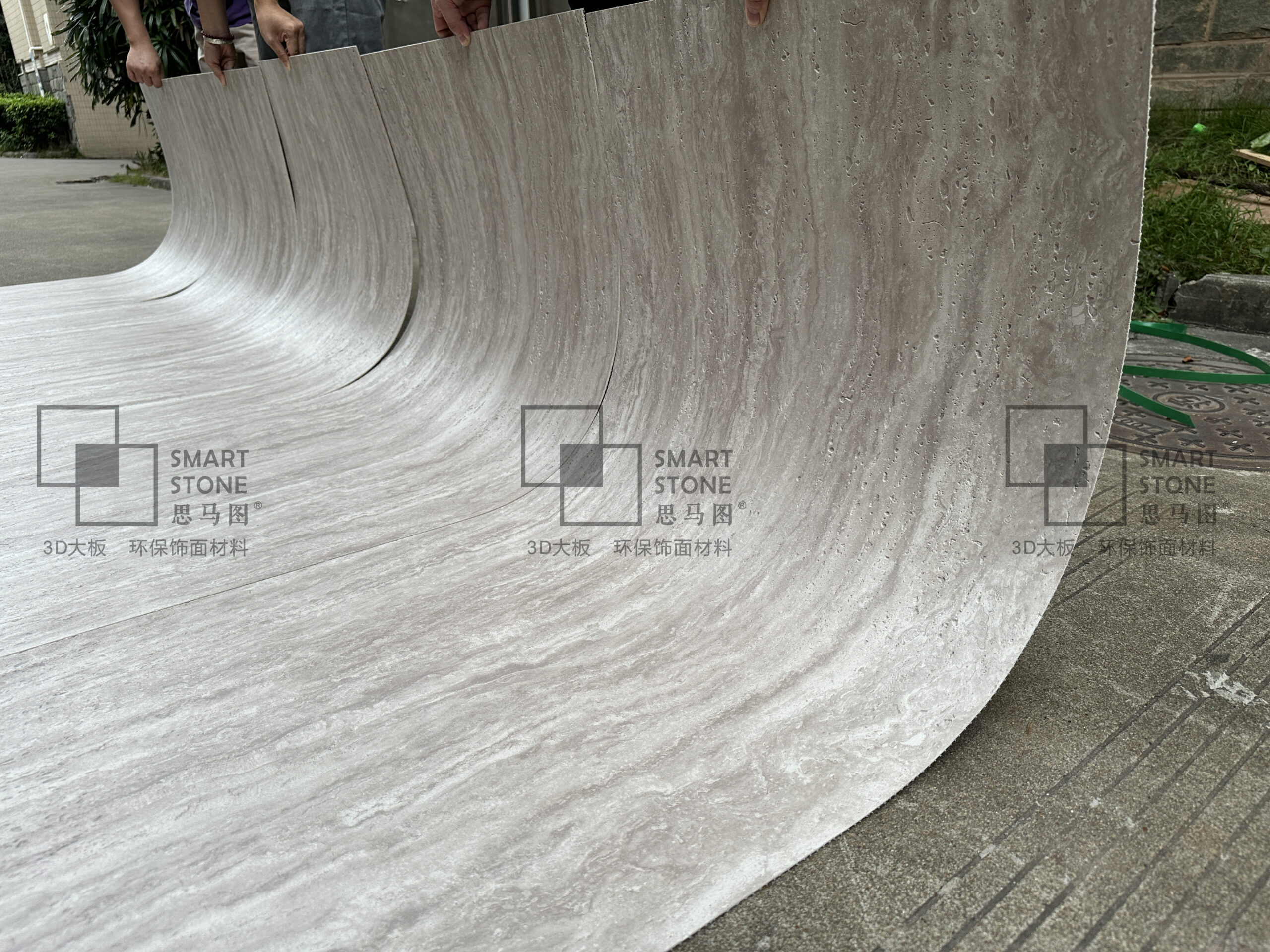
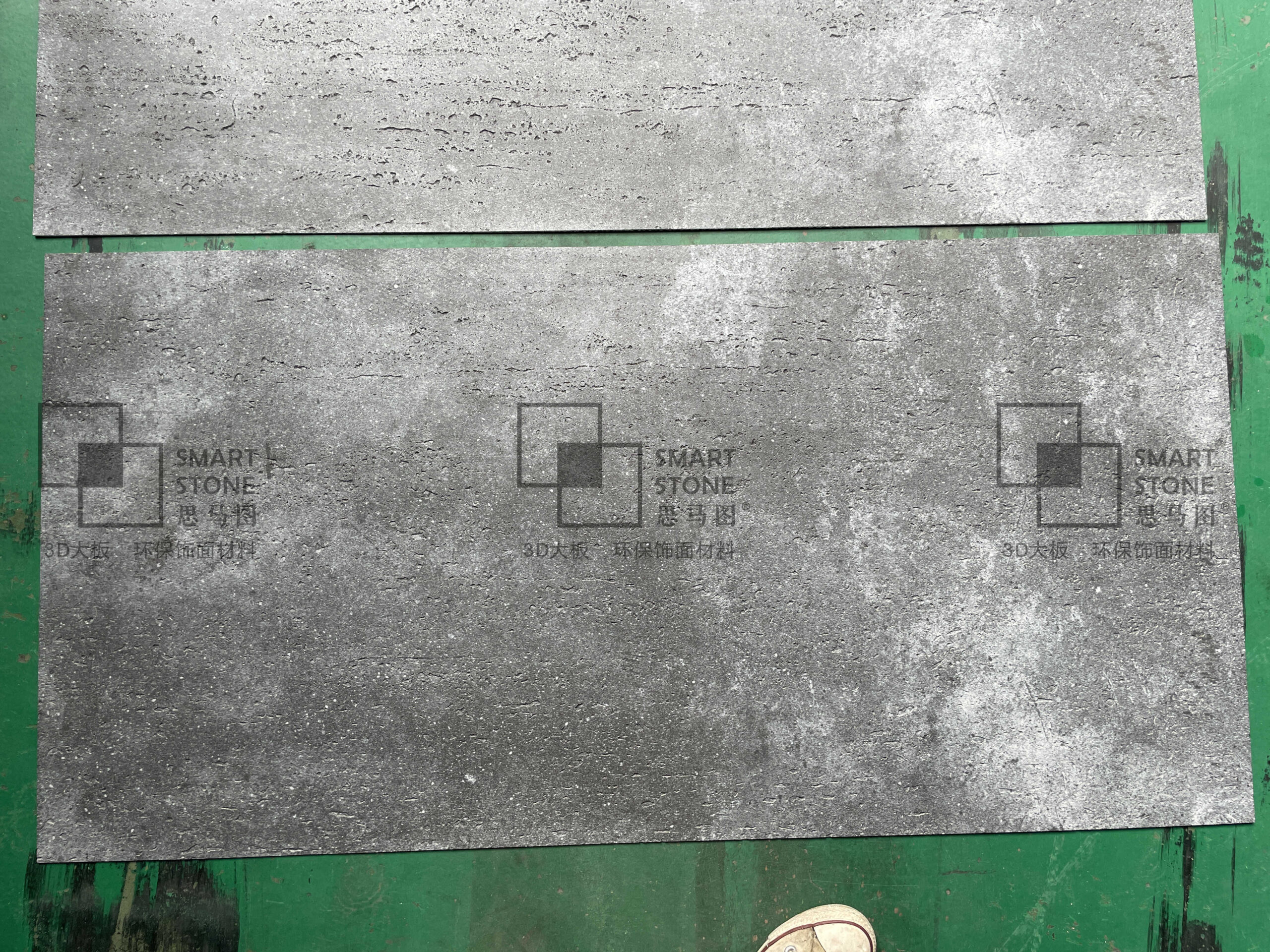
MCM stands for Modified Clay Material. It is made from natural clay, stone powder and fibres, pressed and heat-cured into a thin sheet that carries real stone texture and veining — and bends.
| Property | Value | What it means in practice |
|---|---|---|
| Thickness | 2.5 – 3 mm | Takes no room space and can go over an existing wall |
| Weight | 3 – 4 kg/m² | About one twentieth of stone — no structural strengthening needed |
| Fire rating | Class A (non-combustible) | Accepted on facades and in public buildings |
| Flexibility | Bends around curves | Round columns, arches, curved walls — impossible in marble |
| Water | Waterproof and breathable | Suitable outdoors without trapping moisture in the wall |
| UV resistance | 50+ year service life | Colour holds under Saudi sun |
Why people choose it
- Weight. A whole facade at negligible load — it goes onto existing buildings without new structural calculations.
- Renovation without demolition. Bonded straight over an existing wall or old tiling: no dust, no debris, no need to move out.
- Shapes marble cannot do. Round columns, arches and curved walls need expensive carved pieces in stone; the veneer simply bends around them.
- Safety. Class A fire rating, and light enough that it cannot fall under its own weight.
- Speed. A job that takes weeks in marble takes days in veneer.
Where it works and where it does not
| Application | Suitable? | Why |
|---|---|---|
| Building and villa facades | Yes | Light, sun and rain resistant, covers large areas quickly |
| Interior walls and living rooms | Yes | Full stone appearance with no thickness or weight |
| Columns and arches | Yes — best use | The flexibility is an advantage nothing else matches |
| Bathroom and kitchen walls | Yes | Waterproof, with correct sealing at the joints |
| TV walls and entrances | Yes | One large sheet with no distracting joints |
| Kitchen and vanity tops | No | A working surface meets knives, heat and weight — use quartz or marble |
| Floors | No | Constant abrasion wears the thin layer |
| Stairs | No | A safety and load issue — use stone steps |
Flexible veneer compared to natural marble
| Criterion | MCM flexible veneer | Natural marble |
|---|---|---|
| Thickness | 2.5–3 mm | 18–30 mm |
| Weight per m² | 3–4 kg | 50–80 kg |
| Cost | Considerably lower, especially over large areas | Higher, and rises with rarity |
| Curved surfaces | Bends around them | Needs expensive carved pieces |
| Visual uniqueness | Pattern repeats between sheets | Every slab is unique |
| Horizontal surfaces | Not suitable | Fully suitable |
| Re-polishing | No | Yes, returns to new |
| Speed | Days | Weeks |
The conclusion: it is not a competitor to marble but a complement to it. Many of our projects use flexible veneer on walls and facades, and natural marble on floors, stairs and vanities.
Available finishes
- Travertine — warm beige with natural pores; the most requested finish on facades.
- Limestone — a calm, even surface that suits contemporary design.
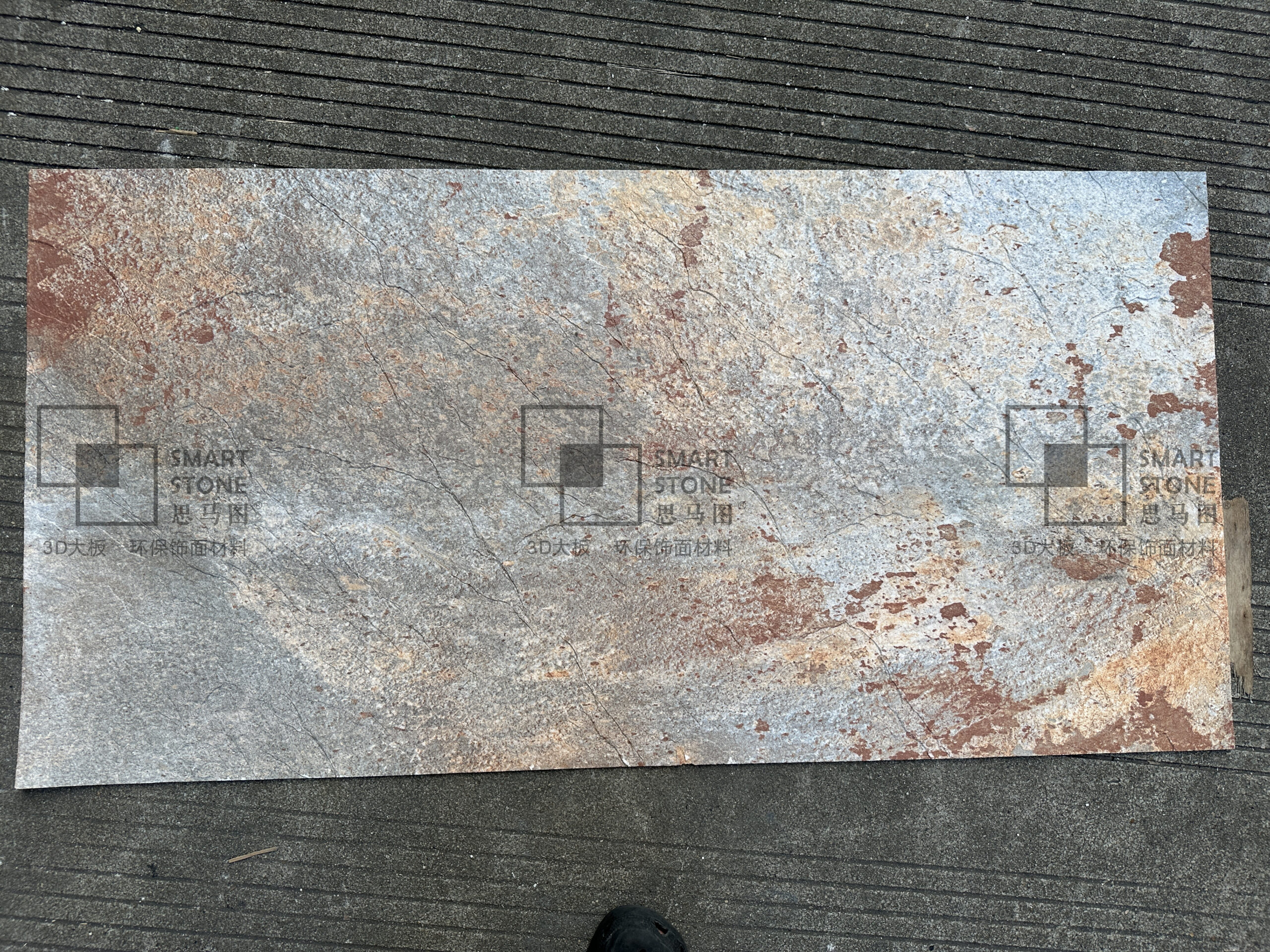
- Golden sand and sunset tones — desert shades that sit naturally in Saudi architecture.
- Dolomite and marble — white with veining, for premium interior feature walls.
- Ando cement — a smooth concrete look for minimal, modern interiors.
Installation steps
- Prepare the substrate. It must be clean, flat and dry. Any loose render or rising damp is fixed first.
- Primer. Improves adhesion, especially on concrete and old tiling.
- Lay out the sheets. Number and arrange them before bonding so the colour variation reads naturally — the most skipped and most important step.
- Bonding. A dedicated adhesive is combed on with a notched trowel; the sheet is pressed and the air worked out from behind it.
- Cutting and curves. Cut with a utility knife; for columns the sheet is warmed slightly so it bends smoothly.
- Joints. Colour-matched grout, or a jointless installation where the design calls for it.
- Protection. An exterior sealer coat improves resistance to dust and grit.

What drives the price?
| Component | Effect |
|---|---|
| Finish and pattern | Complex patterns and larger sheets cost more |
| Area | Rate per m² falls as the project grows |
| Wall condition | An uneven wall needs preparation and levelling |
| Curved surfaces | Columns and arches take longer to install |
| Interior or exterior | Exterior needs stronger adhesives and a protective coat |
| Height | Tall facades need scaffolding or access equipment |
Care and maintenance
- Water and a pH-neutral soap with a soft cloth is all it needs.
- Avoid abrasive products and wire brushes on polished finishes.
- Exterior facades: one annual wash at moderate pressure is enough.
- No periodic sealing, unlike natural marble.
- Local damage is repaired by replacing the affected sheet alone.
Common mistakes
- Using it on horizontal surfaces. The most expensive mistake — veneer is for walls only.
- Installing on a damp wall. Rising damp will push the sheet off within months whatever the adhesive.
- Bonding sheets in random order. Natural colour variation then reads as unintended patches.
- Using general-purpose adhesive. It saves a little and costs a re-installation.
- Confusing it with cheap PVC panels. They look similar in photos; the difference shows after the first summer.
Frequently asked questions
Is a marble alternative the same as artificial marble?
Not necessarily. “Marble alternative” is an umbrella term. MCM flexible veneer is a 2.5–3 mm sheet for wall cladding, while “artificial marble” usually means thick quartz slabs for kitchen and vanity tops. The material, thickness and application are completely different.
How much does it cost per square metre in Saudi Arabia?
It depends on the finish, the area, the condition of the wall, whether the installation is interior or exterior, and the height of the facade. Send us the area and a photo of the wall and you will have an itemised quote within minutes.
Can it be used on external facades?
Yes. MCM flexible veneer is UV and water resistant and rated Class A for fire, and it is used on building and villa facades with a protective coat and dedicated adhesives.
Can it be installed over existing tiles?
Yes, and that is its biggest advantage in renovation. The surface is cleaned, levelled and primed, then the veneer is bonded directly with no demolition and no dust.
Is it suitable for kitchen worktops?
No. A worktop meets knives, heat and weight, and the veneer is only 3 mm thick. For kitchen and vanity tops use quartz slabs or natural marble.
How long does it last?
Quality flexible veneer exceeds 50 years with UV resistance, provided it is installed correctly on a sound, dry wall. Cheap PVC panels last only a few years and we do not supply them.
FREE QUOTE
Request a quote for flexible stone veneer
Send the area, a photo of the wall and whether it is interior or a facade, and the KAASEB team returns an itemised quote covering supply and installation.
Prefer WhatsApp? Message us on +966 50 626 8080
