
 English
 العربية
A marble staircase is the element in a house that combines beauty and risk more than any other: it is the first thing a visitor sees, and it is the one surface where a fabrication error can cause a fall. This guide covers stone selection, riser and tread dimensions, how to calculate quantities and price per metre, and the installation steps that separate a staircase lasting twenty years from one that cracks in its first summer.
In this guide
Why stone for stairs?
A staircase takes constant traffic and direct abrasion from shoes. Timber wears, ceramic chips at the edges — natural stone lasts decades and can be re-ground and re-polished back to new instead of being replaced.
Visually, a stone staircase ties the floors of a house together in one language, especially when the same stone continues into the floors or the entrance. Using a single slab per step — with no joints — is what creates the premium impression that cut tiles never reproduce.
Treads, risers and nosings
Tread
The horizontal surface you step on. The most important piece; 30 mm is the usual thickness.
Riser
The vertical face between two steps. Usually 20 mm, because it carries no load.
Nosing
The projecting front edge of the tread. Its profile determines both looks and safety.
Skirting
A raking stone strip on the wall following the stair, hiding the junction with the wall.
Landing
The flat area between flights, usually larger slabs of the same stone.
Starter step
The first step, often wider and shaped, because it is the most visible.
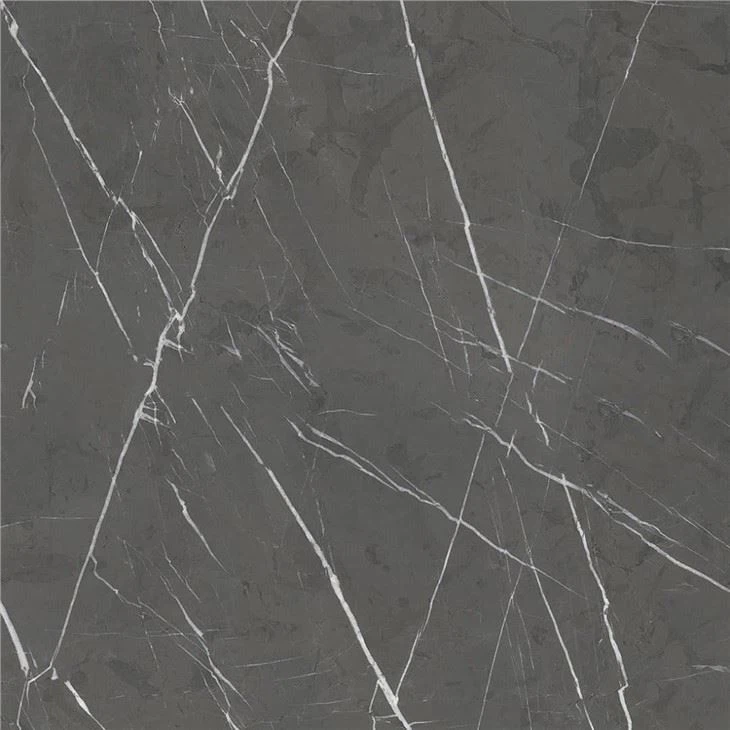

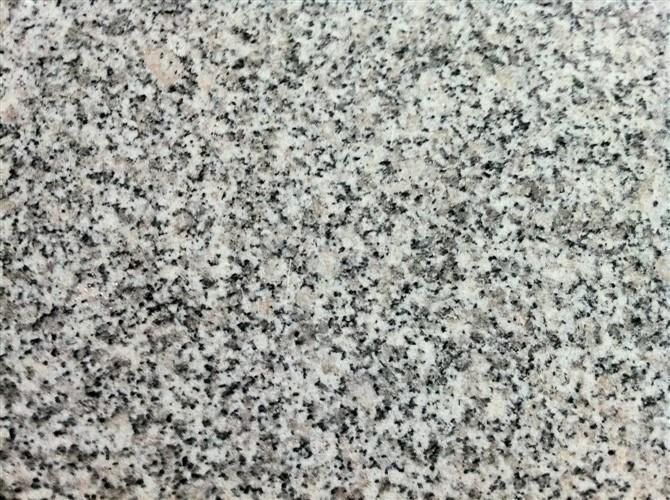
Marble or granite for stairs?
| Criterion | Marble | Granite |
|---|---|---|
| Appearance | Natural veining, greater visual depth | Fine even grain, wider colour range |
| Hardness and wear | Softer; shows abrasion over the years | Harder, better for heavy traffic |
| Slip resistance | Needs a honed finish or anti-slip grooves | Flamed or bush-hammered finishes excel outdoors |
| External stairs | Affected by sun and rain | The right choice outdoors |
| Re-polishing | Easy, returns to new | Possible but harder |
The working rule: marble indoors where appearance leads, granite outdoors and in high-traffic buildings. Browse Marble Steps & Stairs and Granite Steps & Stairs.
Correct dimensions
Comfort on a staircase is not a matter of taste — it is an equation. The internationally used rule: 2 × riser + tread = 60 to 65 cm. Outside that range, users feel the stair is tiring without knowing why.
| Item | Recommended | Note |
|---|---|---|
| Riser height | 16–18 cm | Must be identical on every step |
| Tread depth | 28–32 cm | Below 26 cm the foot is unstable |
| Width, residential | 90–120 cm | 100 cm is comfortable for a family home |
| Tread thickness | 30 mm | 20 mm only for short spans |
| Riser thickness | 20 mm | Carries no load |
| Nosing projection | 2–3 cm | Excessive projection is a trip hazard |
Every step must be exactly the same height. A single centimetre of difference on one step is the leading cause of falls on stairs — because the foot moves from memory, not from sight.
Calculating quantities before requesting a quote
- Number of steps = total floor-to-floor height ÷ target riser height (round to a whole number, then divide the height by that number so all risers are equal).
- Tread area = number of steps × stair width (m) × tread depth (m).
- Riser area = number of steps × stair width × riser height.
- Skirting = the raking length of the stair in linear metres.
- Landings are measured separately in square metres.
A quick example: a 320 cm floor height with a target 17 cm riser gives about 19 steps (320 ÷ 17 = 18.8). At 100 cm width and a 30 cm tread, the tread area is roughly 5.7 m² and the risers about 3.2 m². Send us those figures and you get an accurate quote.
Nosing profiles and slip resistance
- Square nosing: the cleanest and most contemporary, suited to modern interiors.
- Bullnose: the most common; reduces injury risk and hides wear.
- Bevelled nosing: a simple chamfer, a middle ground between the two.
- Grooved anti-slip nosing: two or three grooves cut near the edge — essential for external stairs and public buildings.
If a polished stair is going into a home with children or elderly residents, add clear anti-slip strips or choose a honed finish instead of polished.
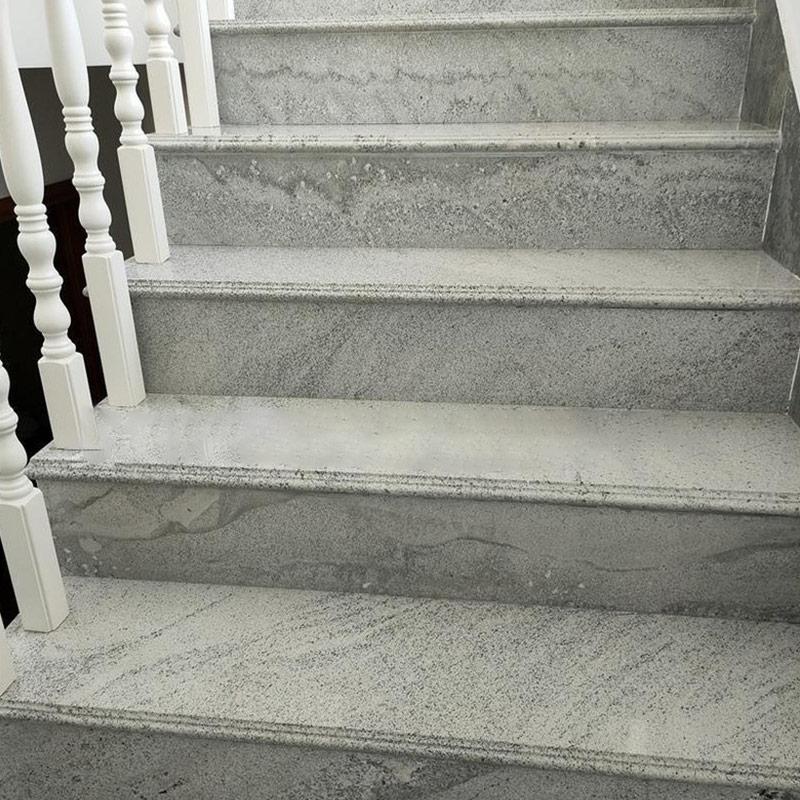
Skirting and balustrade
Raking stone skirting is the detail that separates a professional installation from an ordinary one: without it, the junction between the stone and the wall reads as unfinished. It is cut on the stair rake and installed 7–12 cm high.
The balustrade can be stone (carved balusters and bases) or metal and glass on a stone base. If stone is chosen, the fixing positions must be decided before the treads are cut — drilling after installation risks breaking them.
What drives the price per square metre?
| Component | Effect on price |
|---|---|
| Stone type | The largest factor — premium imported versus local stone or granite |
| Tread thickness | 30 mm costs more than 20 mm but is necessary for safety |
| Nosing profile | Square is cheapest; carved or grooved adds machine time |
| Anti-slip grooves | A separate item measured in linear metres |
| Skirting and starter step | Special pieces cut and polished individually |
| Condition of the concrete stair | An out-of-level structure needs levelling first |
| Location and floors | Manual lifting to upper floors is a real cost item |

Correct installation steps
- Inspect the concrete structure and correct any deviation before anything else.
- Measure every step individually — concrete stairs are rarely identical.
- Cut to the measured reality, not to the drawing.
- Install from the top down so you never walk on newly laid steps.
- Use a stone-appropriate adhesive with full coverage — voids under the tread are what cause later cracking.
- Hairline joints and colour-matched grout.
- Protect after installation until all other trades are finished.
- Final grinding, polishing and sealing.
Mistakes that cost a lot
- Unequal riser heights. A safety hazard that can only be fixed by lifting the stone.
- Cutting to the drawing instead of the site. The result is gaps filled with thick grout that ruins the look.
- Installing too early, before painting and electrical work are done, so the stone gets scratched and chipped.
- Leaving voids under the treads. Any void becomes a crack under repeated load.
- A polished finish on an external stair. Beautiful on handover day, dangerous at the first rain.
- Not buying spare material from the same batch. Natural stone varies between shipments, and replacing a broken step later becomes visually impossible.
Frequently asked questions
How much does marble stair cladding cost per square metre?
It varies with the stone, tread thickness, nosing profile, skirting, anti-slip grooves and the condition of the concrete stair. Send the number of steps, the stair width and your preferred stone and you will receive an itemised quote within minutes.
Marble or granite for stairs?
Marble is more beautiful and preferred for internal stairs; granite is harder, more wear and slip resistant and preferred for external stairs and high-traffic buildings.
What is the ideal step dimension?
A riser of 16–18 cm and a tread depth of 28–32 cm, satisfying 2 × riser + tread = 60–65 cm. Most importantly, every step must be exactly equal.
Are marble stairs slippery?
Polished marble is slippery when wet. The solutions are a honed finish, anti-slip grooves near the nosing, or a bullnose nosing with clear anti-slip strips.
How many steps for a 3 metre floor height?
At a 17 cm riser you need about 18 steps. Divide the floor-to-floor height by your target riser, round to a whole number, then redistribute the height equally across that number.
Do you work outside Riyadh?
Yes — we supply and install marble and granite staircases in Riyadh, Jeddah, Dammam, Khobar, Makkah, Madinah, Qassim and the rest of Saudi Arabia.
FREE QUOTE
Request a quote for a marble or granite staircase
Send the number of steps, the stair width and your preferred stone, and you will receive an itemised quote covering supply and installation.
Prefer WhatsApp? Message us on +966 50 626 8080
