
 English
 العربية
The vanity is the surface everyone who enters your home touches. It is also the one that exposes poor workmanship fastest: one degree of wrong fall, or cheap silicone at the bowl, and expensive marble turns into a maintenance problem. This guide covers the types of marble sinks, the correct sizes, natural versus engineered stone, and how to order a custom marble vanity in Riyadh and across Saudi Arabia with a written specification.
In this guide
Why marble for vanities?
A vanity is a small surface with very high visibility — which is exactly why it deserves a better material than the rest of the bathroom. Marble gives you three things that are hard to get together: visual depth no printed surface can imitate, the ability to be cut to any size and any number of bowls, and a service life measured in decades rather than years.
Practically, a stone vanity is one continuous piece with no joints for dirt to collect in — unlike tops assembled from tiles or small units.
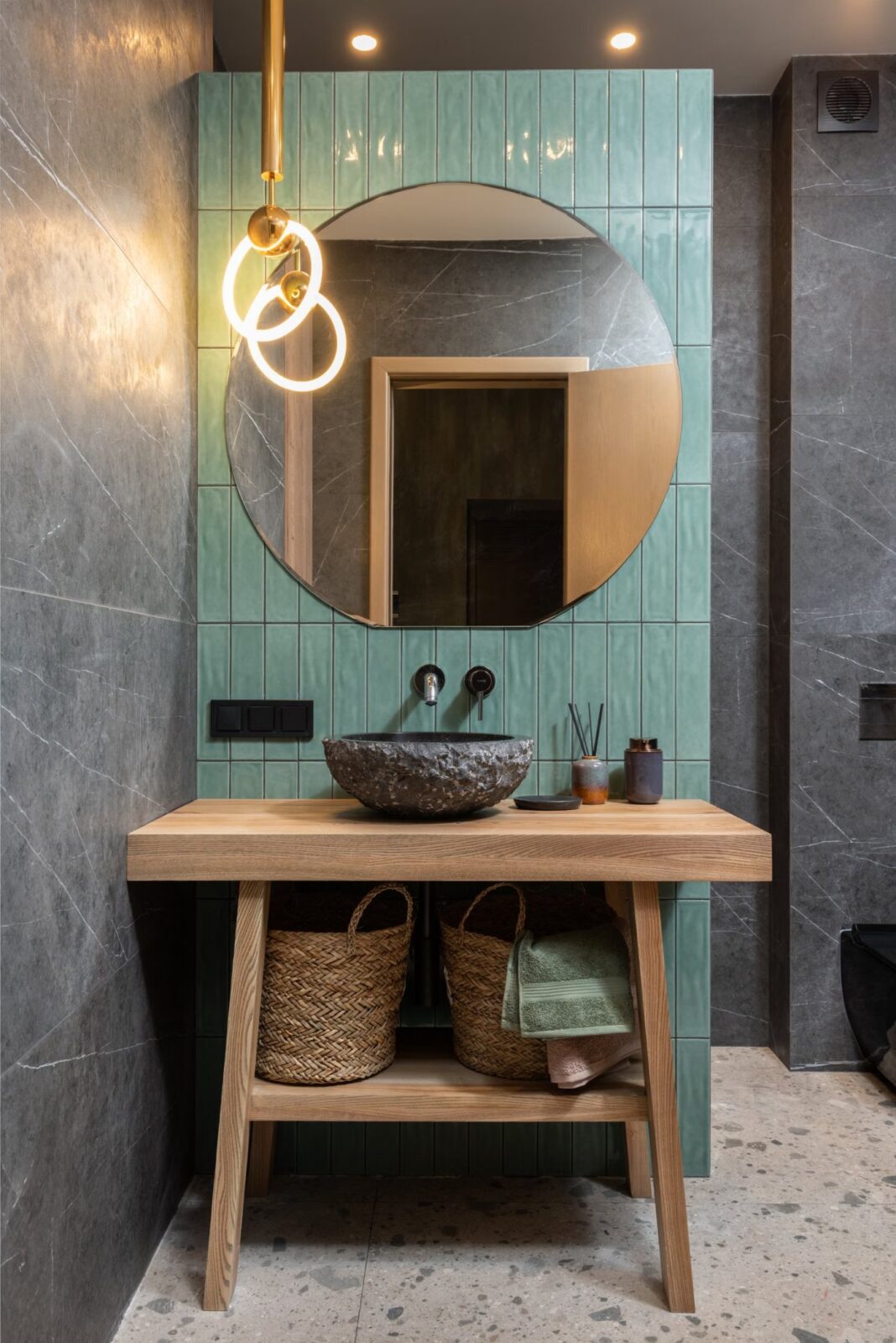
Types of marble sinks
Natural marble vanity
Cut from a natural slab with unique veining. The most luxurious look; needs periodic sealing.
Engineered marble
Higher resin content, consistent colour, lower porosity. Excellent for busy guest bathrooms.
Granite vanity
The hardest and most resistant to scratching and acids. A practical choice for shared bathrooms and projects.
Carved from solid
The bowl itself is cut from the block — no separate basin. Highest cost, highest impact.
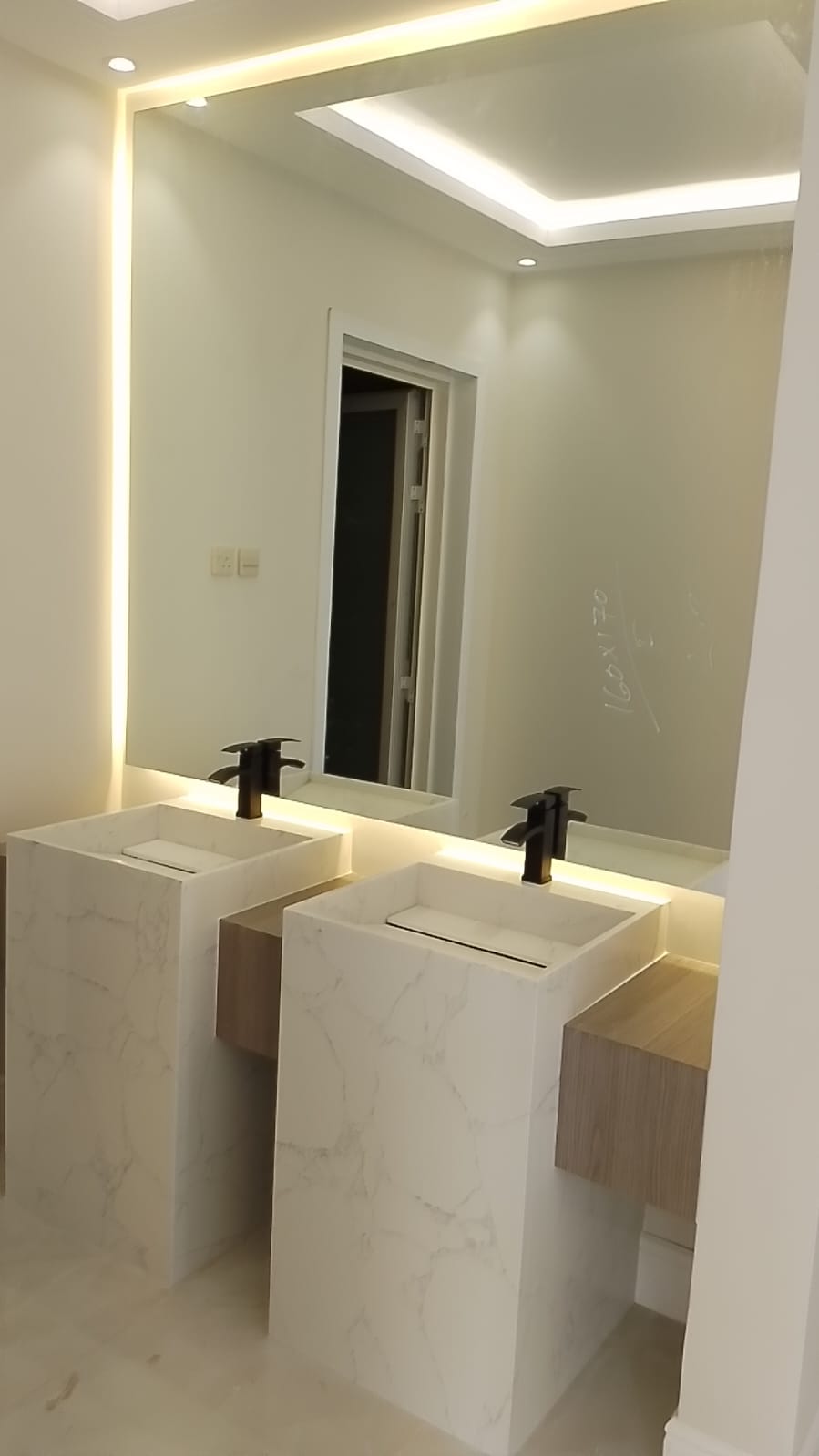
With a stone pedestal
Top and support from the same stone, reading as a single mass and hiding the plumbing.
Double vanity
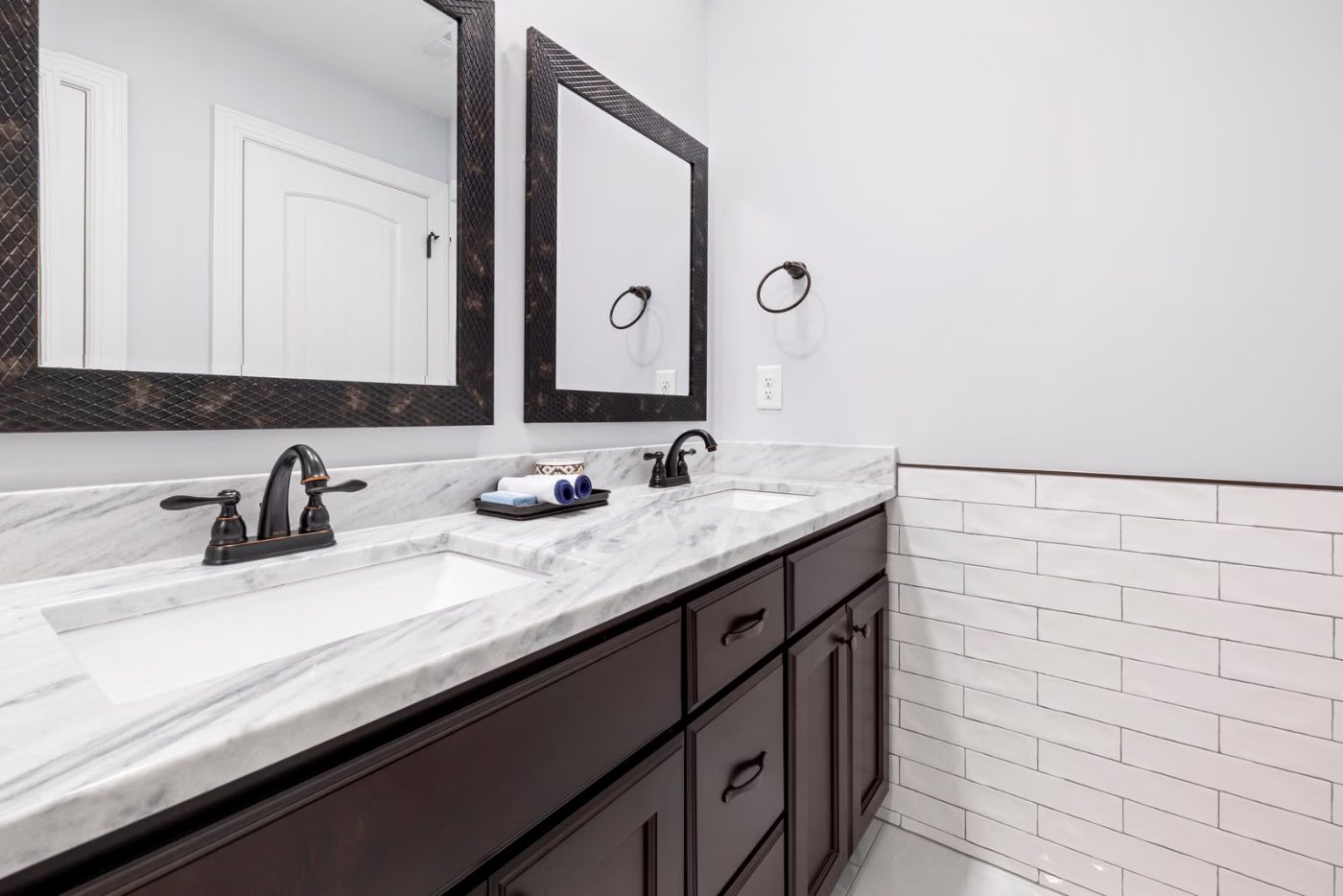
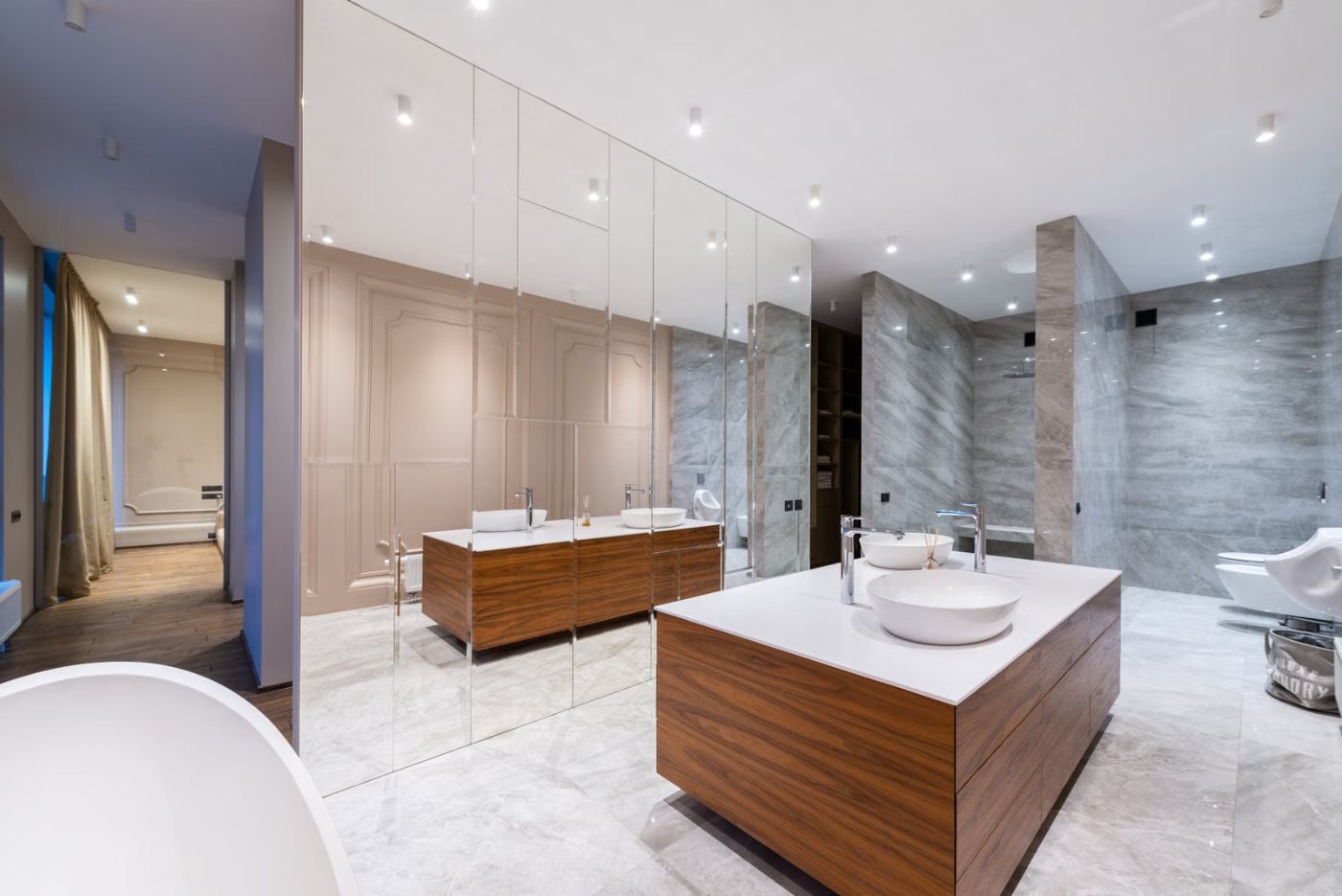
Two bowls on one slab for a master suite. Needs at least 150 cm of width to be comfortable.
See what is available in Marble Sinks.
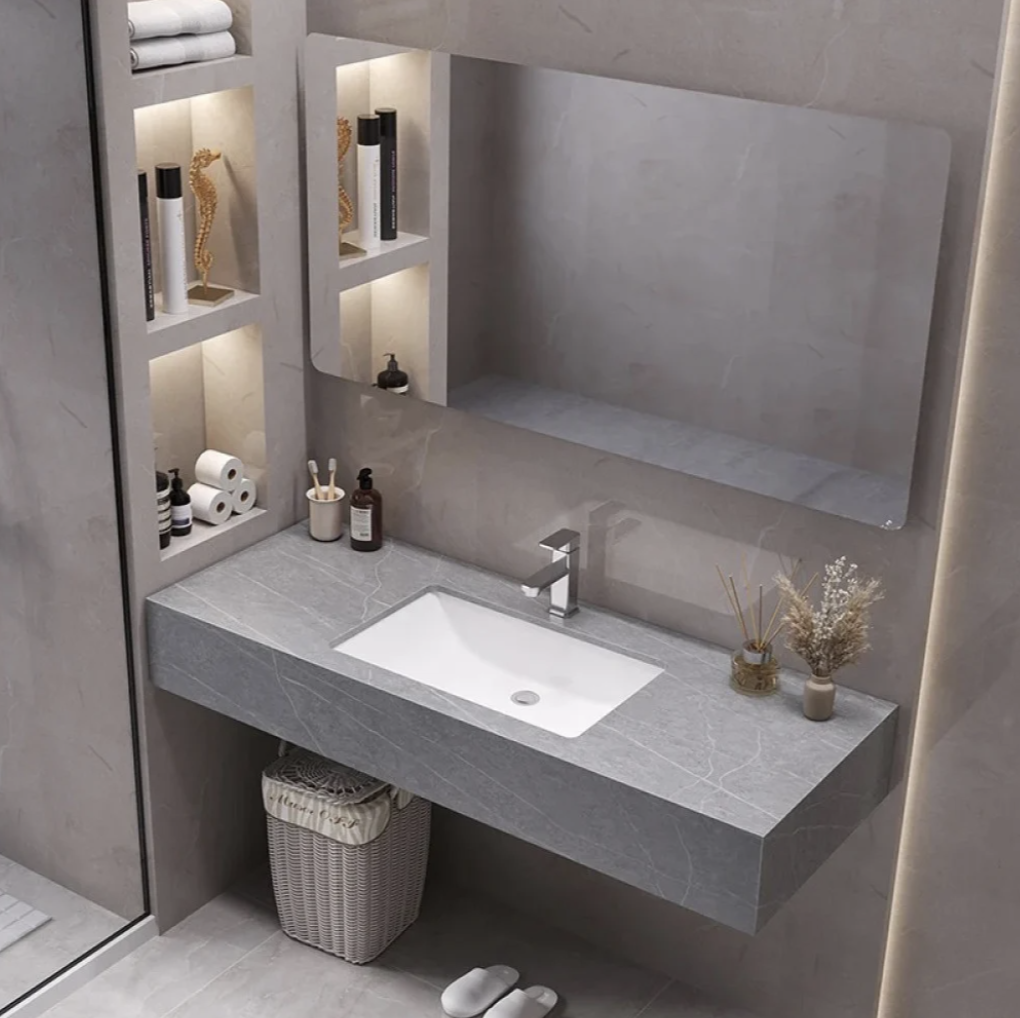
Bowl mounting — the decision that changes both looks and cleaning
| Method | Description | Advantage | Watch out for |
|---|---|---|---|
| Vessel | Bowl sits on top of the stone | Most striking, and easy to replace later | Needs a tall tap; cleaning around the base takes care |
| Undermount | Fixed beneath the slab, cut edge polished | Easiest to clean — wipe water straight into the bowl | Requires precise cutting and polishing of the opening |
| Integrated | Bowl carved from the same slab | No joints at all, the most refined result | Highest cost; needs a thick block |
| Drop-in | Drops into an opening, rim rests on the top | Fastest and least expensive | The raised rim collects dirt over time |
Natural or engineered marble for a bathroom?
- Master or guest bathroom with a premium look: natural marble — the unique veining is the whole point.
- Children’s bathroom or very heavy use: engineered marble or granite, far less reactive to cleaning products.
- A project with repeated identical units: engineered, because colour consistency between units is guaranteed.
- Kitchen sink surround: granite, because of food acids and heat.
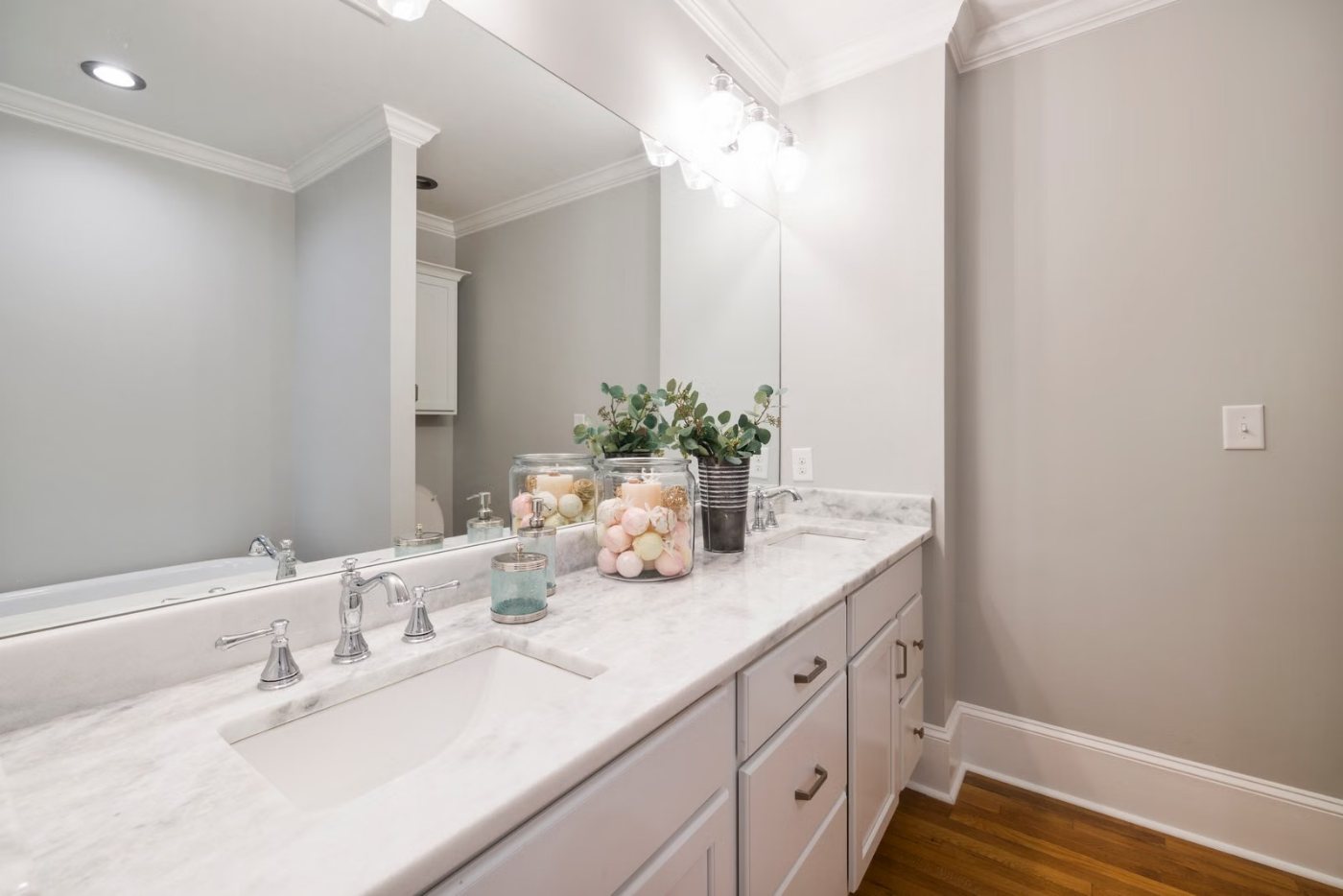
Standard sizes and heights
| Item | Common size | Note |
|---|---|---|
| Vanity depth | 50–60 cm | Below 45 cm becomes uncomfortable to use |
| Single vanity width | 60–120 cm | 90 cm is the best balance for an average bathroom |
| Double vanity width | 150–200 cm | Allow at least 75 cm per user |
| Height from floor | 85 cm | Drop to 80 cm when using a tall vessel bowl |
| Slab thickness | 20 mm (30 mm for large spans) | A mitred edge gives a 40–60 mm appearance |
| Backsplash height | 10–15 cm, or full height | Full height protects the wall completely |
Tap holes, fall and drainage
- Tap hole position is set before cutting, based on the tap type (deck or wall mounted) and the exact centre of the bowl. A hole out by millimetres cannot be corrected.
- Number of holes: single mixer (one hole) or three-hole set at 10 cm centres. Know the tap model before fabrication.
- Fall to drain: a very slight fall towards the bowl stops water pooling. A perfectly level top leaves limescale marks.
- Undermount cut edge must be polished and radiused — a rough edge traps dirt and is hard to clean.
- Silicone: mould-resistant and colour matched to the stone. It is the cheapest material in the job and the one that most affects how it looks a year later.
The cabinet or opening dimensions, the tap type and model (deck or wall), and the bowl type (vessel, undermount, integrated). These three prevent 90% of installation problems.
Backsplash and edge profiles
The backsplash is a strip of the same stone fixed to the wall behind the vanity. Ten to fifteen centimetres is enough to protect the wall from splashing, while a backsplash running up to the mirror or the ceiling gives a hotel-grade result and protects the paint permanently.
Front edge options are the same as for tables: flat (most current), bullnose (safest with children), bevel, or ogee. A mitred edge gives the look of a thick slab without the cost of a solid block.
What drives the price of a marble vanity?
| Component | Effect |
|---|---|
| Stone type | The biggest factor: imported natural > local natural > engineered |
| Size and number of bowls | A double vanity needs a wider slab, two cuts and more polishing |
| Bowl mounting method | Integrated highest, then undermount, vessel, drop-in |
| Pedestal and backsplash | Stone supports and full-height splashbacks are separate items |
| Cut-outs | Every tap and waste opening adds machine time |
| Installation and location | Number of units per visit and the city |
From order to installation
- Measuring: either your dimensions or a site visit to confirm the walls are square.
- Slab selection: we send photos of the slabs physically in stock so you choose the veining.
- Written specification: size, thickness, bowl type, tap hole count, backsplash height, edge profile.
- CNC cutting and shaping for accurate openings.
- Polishing and sealing: polished or honed, then an impregnating sealer.
- Installation: levelling the cabinet, bedding the top, fitting bowl and tap, final silicone.
Caring for a marble vanity
- Wipe the surface after use — hard water leaves the white limescale marks that are the number one complaint.
- Avoid acidic and abrasive cleaners; use a pH-neutral soap.
- Watch personal care products: toothpaste, perfume and hair dye all leave marks if left.
- Re-seal annually for natural marble, every two years for engineered stone and granite.
- Inspect the silicone every year and renew it at the first sign of discolouration.
Frequently asked questions
How much does a marble vanity cost in Riyadh?
It depends on the stone, the size, the bowl mounting method and whether there is a pedestal or a full-height backsplash. Send the cabinet dimensions and the tap type and you will receive an itemised quote within minutes.
Is marble suitable for a busy bathroom?
Yes, provided it is properly sealed. For very heavy use or children’s bathrooms, engineered marble or granite is less sensitive to cleaning products.
What is the difference between natural and engineered marble?
Natural marble is quarried stone with unique veining and higher porosity. Engineered marble is made from stone aggregate and resin, so the colour is consistent, porosity is lower and maintenance is easier — but it lacks the uniqueness of natural veining.
Can you make a non-standard size?
Yes. Every vanity is made to order, including the number of bowls, tap hole configuration, backsplash height and edge profile.
Does the service include installation?
Yes — supply and installation across Riyadh and the whole Kingdom, including bedding the top, fitting the bowl and final sealing.
How long does it take?
Usually a few days for stock slabs, slightly longer for integrated bowls or imported stone. We confirm the lead time with the quote.
FREE QUOTE
Order a marble vanity made to your size
Send the cabinet dimensions, bowl type and tap model, and the KAASEB team returns an itemised quote covering supply and installation.
Prefer WhatsApp? Message us on +966 50 626 8080
